
You have decided to dive into mountain biking. The thrill of the trail, the fresh air, and the adrenaline are calling your name. But then you look at the sheer number of options online and in local shops, and the excitement quickly turns into confusion. Will that $300 bike get you killed on a downhill section? Do you really need full suspension? You are about to spend hundreds, potentially thousands, of dollars, and the fear of making a costly mistake is real.
What is the single most common mistake first-time MTB buyers make?
The worst mistake is buying a bike based solely on price or looks. Beginners often grab a cheap “mountain bike” from a big-box store because it seems like a bargain. This almost always leads to a poor riding experience, broken components, and a bike that is unsafe on real trails.
These bikes, often called “BSOs” (Bicycle Shaped Objects), use heavy steel frames, suspension forks that add weight without absorbing bumps, and cheap shifters that fail within weeks. The immediate “cost” is the purchase price, but the real cost is the frustration and the expense of upgrading or replacing it within a year. A better approach is to look for a bike from a reputable brand with a frame that fits you well. The single most expensive mistake is buying a bike that physically hurts to ride. A bad fit can cause back pain, knee pain, and wrist numbness, effectively ending your riding season before it begins.
Why does frame material matter more than you think?
Frame material directly dictates the weight, durability, comfort, and longevity of your first mountain bike. Choosing the wrong material can mean fighting a heavy bike uphill or worrying about cracking a frame on a simple drop.
Most entry-level mountain bikes come in two main materials: aluminum and steel, with a rare few in carbon or titanium. Aluminum is the standard for modern MTBs. It is stiff, light, and inexpensive, making it perfect for beginners. Steel frames are heavier but offer more flex and compliance, which soaks up trail vibrations. Steel is also incredibly durable and easier to repair if dented. For a first bike, an aluminum hardtail is the safest bet. It balances weight, performance, and cost effectively.
Here is a quick breakdown of what to expect:
- Aluminum (6061 or 7005): Best value for weight. Stiff for efficient climbing. Standard for almost all modern MTBs.
- Steel (Chromoly): Heavier but very durable. Offers a smoother ride due to natural flexibility. Good for rigid or hardtail builds.
- Carbon Fiber: Very expensive and not recommended for a first bike. Light and stiff but can be damaged by hard impacts.
How do you choose the right wheel size for your height and riding style?
Your wheel size determines how your bike rolls over obstacles and how it handles corners. The three standard sizes are 26-inch, 27.5-inch, and 29-inch. For most beginners over 5’6″, a 29-inch wheel is the best choice for stability and rolling efficiency.
Wheel size is a crucial decision because it changes the geometry of the bike. 26-inch wheels are agile and nimble but get hung up on roots and rocks. 27.5-inch wheels offer a middle ground of agility and rollover. 29-inch wheels have the most momentum and roll over obstacles easily, but they can feel less playful and are heavier.
Here is a simple selection guide:
- Under 5’4″ tall: Look for 27.5-inch wheels. 29ers might feel too large and hard to maneuver.
- Between 5’4″ and 5’8″: You can ride either 27.5 or 29-inch wheels. Test both if possible.
- Over 5’8″: A 29-inch wheel is usually the best fit. It maximizes stability and speed.
Which type of suspension is right for a beginner: hardtail or full suspension?
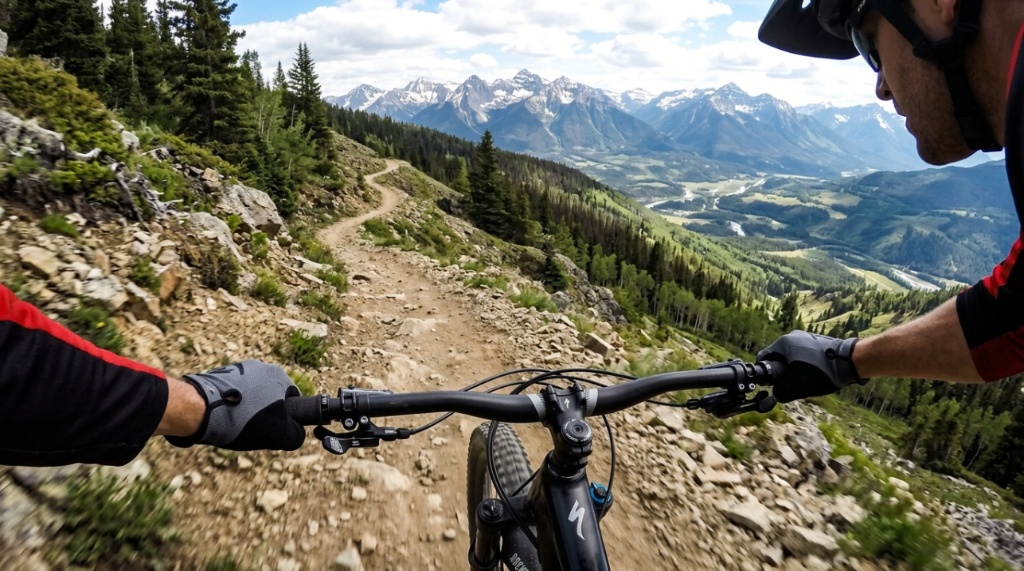
For your first mountain bike, a hardtail is almost always the right answer. A hardtail has front suspension only, while a full-suspension bike has both front and rear shocks. Hardtails are cheaper, lighter, more efficient for climbing, and easier to maintain.
Full-suspension bikes excel at absorbing large bumps and providing traction on technical descents. However, they require more maintenance (pivot bearings, rear shock service) and cost significantly more for a quality build. A cheap full-suspension bike is a disaster; the rear shock will bob when you pedal, and the linkage will rattle loose. A quality hardtail will teach you how to pick a line, climb efficiently, and descend with confidence. If you live in a place with very rough, rocky terrain, you might consider saving up for a decent full-suspension bike, but a hardtail is the better learning tool.It’s easy to overspend on features you don’t need yet. Before dropping thousands on a high-end setup, check out our guide on the Mountain Bike for Beginners on a Budget to see how much quality performance you can actually get without breaking the bank.
What is the most important component to check on a budget MTB?
The drivetrain is the mechanical heart of your bike, but the most critical component for safety and longevity is the brakes. Specifically, you want hydraulic disc brakes. Mechanical disc brakes and rim brakes are inferior in wet conditions and require more hand strength.
Hydraulic disc brakes provide consistent, powerful stopping power with minimal finger effort. They are self-adjusting, meaning you don’t have to tighten a cable as the brake pads wear down. A bike with poor brakes is dangerous. When you are descending a steep hill or avoiding a sudden obstacle, you need dependable, modulated braking. Check the spec sheet on any bike you consider. If it says “Tektro mechanical” or “Shimano mechanical,” those are acceptable but not great. If it says “Shimano MT200” or “SRAM Level,” you are in good shape.
How can you tell if a bike fits you without a test ride?
You can get a very accurate fit assessment by comparing your height and inseam to the bike’s “reach” and “stack” measurements on the manufacturer’s geometry chart. Bike fit is non-negotiable. A bike that is too big will feel like a boat; one that is too small will feel cramped and unstable.
Most brands offer size charts (S, M, L, XL) based on rider height. However, these charts are general. The “reach” measurement (horizontal distance from the bottom bracket to the head tube) is more accurate. For a beginner, a slightly smaller bike is better than a slightly larger one. A smaller bike is easier to maneuver and lower to the ground, boosting confidence. If possible, visit a local bike shop and sit on similar bikes. If buying online, use the brand’s geometry calculator and compare it to a bike you know fits you.
The best way to protect your wallet and your safety is to treat the purchase like a research project. You need a solid foundation of knowledge found in a good MTB bike review + mountain bike buying guide before you swipe your card.
When should you spend more money on a mountain bike?
You should spend more money when the upgrade directly improves safety, reliability, or durability. The jump from a $500 bike to an $800 bike is often more significant than from $800 to $1,200. The price threshold where components get reliably good is around $800 to $1,000.
At this price point, you typically get a tapered headtube, boost hub spacing, and a decent air fork instead of a coil spring fork. You also get a 1x drivetrain (single chainring up front) which simplifies shifting and prevents dropped chains. Spending more than that often buys lighter weight, carbon fiber parts, and more travel. For a first bike, focus on the $800–$1,200 sweet spot. This gets you a bike that will handle real trails without falling apart.
Can an entry-level bike handle intermediate trails?
Yes, a properly chosen entry-level hardtail can absolutely handle intermediate (blue square) trails. The limiting factor is not the frame, but the rider’s skill and the tire grip. A $900 hardtail with good tires is capable of riding 90% of the trails a beginner will encounter for their first two years.
What makes a bike “entry-level” is usually the suspension fork and drivetrain. A basic coil fork may not have adjustable damping, but it will absorb bumps. The key to riding intermediate trails on an entry-level bike is riding technique. You must learn to unweight the front wheel, pick smooth lines, and carry momentum. The bike is capable; the rider just needs to build confidence. However, avoid “double black diamond” trails with large drops or jumps. Those require more robust suspension and stronger wheel rims.
What tools or spare parts should a beginner carry on the trail?
A beginner should always carry a spare tube, tire levers, a pump or CO2 inflator, a multi-tool with chain breaker, and a patch kit. This kit solves 95% of common trailside mechanicals: flat tires, loose bolts, and a broken chain.
Nothing ruins a ride faster than a mechanical issue miles from the car. A flat tire is the most common problem. Practice changing a tube at home before you need to do it on a trail. A multi-tool is essential for tightening loose handlebars, seatpost bolts, or brake levers. A chain breaker is a lifesaver if your chain snaps. If you don’t want to carry a lot of gear, a minimalist setup includes a tube, two tire levers, and a small hand pump strapped to your frame. This small investment in gear prevents the costly mistake of having to walk your bike back for miles.
Is it worth buying a used bike as your first mountain bike?
Buying a used mountain bike can be a great way to get a higher-quality bike for your budget, but it carries significant risk for a complete beginner. You can save 30-50% off the retail price, but you need to know what to look for.
The biggest risks are buying a bike with a cracked frame, worn-out suspension, or a worn-out drivetrain that requires expensive replacement. If you are buying used, look for a bike that is 2-4 years old. Check the frame for cracks (especially near welds). Spin the wheels; they should be true and not wobble. Check the chain for stretch using a chain checker tool. If you do not know what to look for, bring a knowledgeable friend. If you cannot find a good used option, a new entry-level hardtail is a safer bet. The peace of mind from a warranty and a bike that works out of the box is often worth the extra cost.
How do you find the best MTB deals without getting scammed?
The best way to find genuine deals is to shop end-of-season sales at local bike shops, check the clearance section of major online retailers, and compare detailed specifications from a trusted MTB bike review + mountain bike buying guide. Avoid flashy ads on social media from unknown brands.
Scams often involve “too good to be true” prices, stock photos of expensive bikes, and vague spec sheets. Always look up the brand name. If the brand has no history, no reviews, and no parts support, avoid it. Real deals happen on previous-year models. Manufacturers change paint colors and minor components, but the frame and basic design remain the same. A 2023 model discounted in 2024 is usually an identical ride to the current model. Sign up for newsletters from reputable shops and use price-tracking tools to see when prices drop. Never wire money or pay via gift card for a bike.
Frequently Asked Questions
What is the best brand for a first mountain bike?
The best brands for beginners are Trek, Giant, Specialized, Cannondale, and Marin. These brands offer excellent warranty support, reliable frames, and components that are easy to service at any bike shop. Avoid brands found only on Amazon with names that include random letters or numbers.
How much should I spend on my first mountain bike?
You should budget between $800 and $1,200 for a new bike. This price range buys a bike with a decent frame, hydraulic disc brakes, and a reliable drivetrain. Spending less than $500 usually results in a heavy, unreliable bike that will be frustrating to ride.
Are 26-inch wheels outdated for mountain biking?
26-inch wheels are largely outdated for new trail and cross-country mountain bikes. They are now mostly found on kids’ bikes, dirt jumpers, and some cruiser models. For general trail riding, 27.5 or 29-inch wheels are superior for stability and rolling over obstacles.
Can I use a mountain bike for commuting on pavement?
Yes, you can use a mountain bike for commuting, but it is not the most efficient option. The knobby tires create rolling resistance and the upright riding position is less aerodynamic for speed. If you plan to commute a lot, consider buying a second set of smooth “slick” tires.
What does “1x” mean on a mountain bike drivetrain?
“1x” means the bike has one chainring on the front and a cassette with a wide range of gears on the back. It eliminates the front derailleur, which means fewer things to go wrong and less chain drop. It is the standard on all modern mountain bikes.
Should I buy a full suspension bike for bike parks?
If you know you will only ride downhill park trails, a used full-suspension bike with longer travel (140-160mm) is ideal. However, for general trail riding and park riding, a hardtail is a better first bike because it teaches you proper technique.
How often should I service my new mountain bike?
You should perform basic cleaning and chain lubrication after every ride. A full tune-up (cable adjustment, brake bleed, bearing check) should be done once a year or every 100 hours of riding. Suspension service is typically required every 50-100 hours.