

Learning to skateboard is one of the most exciting physical activities you can pick up at any age. The freedom, the creativity, and the community make it incredibly rewarding. However, falling is part of the learning process, and falling without proper protection can turn a fun experience into a painful one.
Choosing the right protective gear feels overwhelming when you’re just starting out. There are dozens of brands, styles, and price points competing for your attention. Understanding what actually matters in protective equipment helps you make smarter decisions and keeps you skating longer.
This guide covers everything a new skater needs to know about choosing pads that genuinely protect your body. From understanding different pad types to recognizing quality materials, you’ll finish this article with the confidence to make the right purchase.
Why Protective Gear Matters More Than You Think
Many beginners underestimate how important padding actually is. They see experienced skaters cruising without gear and assume it’s optional. This thinking leads to unnecessary injuries that sideline new skaters before they’ve had a chance to develop real skills.
When you’re learning, your body hasn’t developed the muscle memory to fall safely. Experienced skaters instinctively know how to roll, slide, and absorb impact. Beginners don’t have these reflexes yet. Therefore, padding fills the gap while your body learns these protective responses.
Skateboarding injuries among beginners most commonly affect the wrists, knees, and elbows. These are the parts of your body that instinctively reach out to break a fall. Proper pads absorb the impact energy that would otherwise transfer directly into your joints and bones.
Additionally, wearing pads gives you psychological confidence. When you know your knees are protected, you’re more willing to attempt new moves. This willingness to try accelerates your learning curve significantly compared to skating in fear.
The Essential Pads Every New Skater Needs
Not all pads are equally important for beginners. Knowing which pieces of gear should be on your shopping list first helps you prioritize your budget effectively.
Knee pads rank as the most important investment for new skaters. Your knees absorb tremendous impact during falls, and knee injuries can require lengthy recovery periods. A good pair of knee pads should be your first purchase.
Wrist guards come in as a very close second. When humans fall, the instinct is to reach out with open hands. This natural response transfers tremendous force into the wrists. Wrist guards include a plastic splint that prevents hyperextension and distributes impact across a larger area.
Elbow pads complete the essential trio. While elbow injuries are generally less severe than knee or wrist injuries, elbows take a lot of hard hits during the learning phase. Bruised or scraped elbows are uncomfortable and can interfere with your daily life.
A helmet rounds out your core protection package. While not a pad in the traditional sense, no protective gear discussion is complete without mentioning head protection. Always wear a helmet, regardless of your skill level or the tricks you’re attempting.
Understanding Different Pad Designs
Protective pads come in two main designs, and each suits different skating styles and preferences. Understanding the difference helps you choose what will actually work for you.
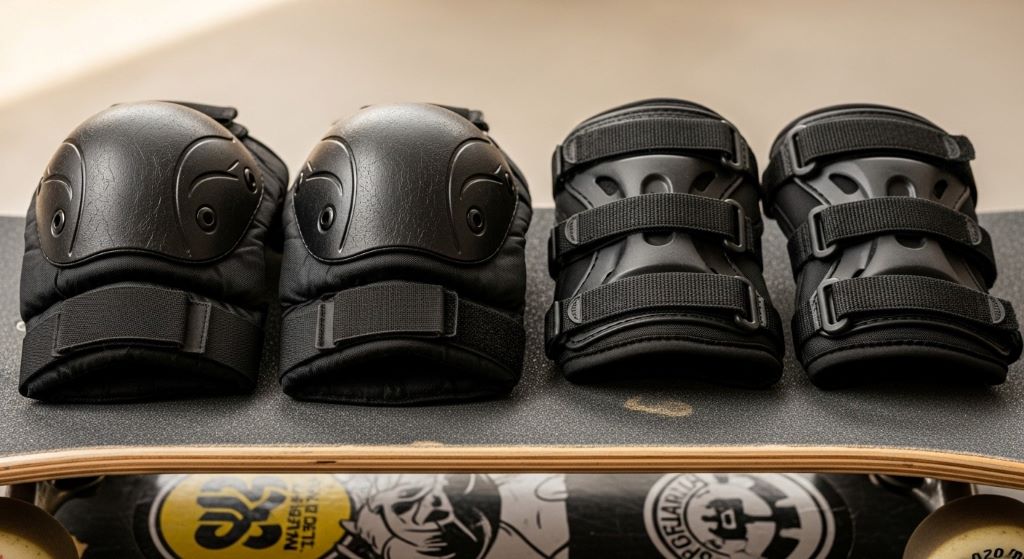
Hard shell pads feature a rigid plastic cap on the outside with foam padding underneath. The hard shell slides across the ground during falls instead of gripping it. This sliding action dissipates impact energy more effectively than stopping abruptly. Hard shell pads excel for street and park skating where contact with pavement and concrete is common.
Soft pads use dense foam or gel padding without a rigid outer shell. They compress upon impact to absorb energy. Soft pads generally feel more comfortable during normal movement and are less intrusive while skating. However, they don’t slide as smoothly on hard surfaces and may not provide the same level of protection in high-impact situations.
Some pads combine both approaches with a hard outer cap over cushioned inner padding. These hybrid designs offer benefits of both systems. For most beginners, this combined approach provides excellent all-around protection at a reasonable price.
Knee sleeves represent another category worth mentioning. These slip-on pads are thin and comfortable but offer limited impact protection. They’re better suited for preventing scrapes than absorbing hard falls. New skaters should choose proper knee pads over sleeves.
What to Look for in Quality Construction
The difference between pads that protect and pads that fail often comes down to construction quality. Learning to recognize quality helps you avoid wasting money on gear that won’t keep you safe.
The outer shell material should feel solid and substantial. Tap it with your knuckle. Good hard shell pads sound solid rather than hollow. The plastic should have some flex without cracking. Overly rigid plastic can shatter on impact rather than absorbing and distributing force.
Interior foam density matters enormously. Press your thumb firmly into the padding material. It should compress but resist firmly, not sink in easily. Low-density foam collapses completely on impact without providing adequate protection. High-density or multi-layer foam maintains structure while still absorbing energy.
Stitching should be tight and even throughout the pad. Check seams at stress points like where straps attach and where the cap meets the fabric backing. Loose or irregular stitching indicates poor quality control and predicts premature failure.
The fabric backing should feel durable and slightly grippy on the inside. This texture keeps pads in position during movement. Slippery fabric linings allow pads to rotate out of position during falls, eliminating their protective value right when you need it most.
Getting the Right Fit
Even the highest quality pads provide no protection if they don’t fit properly. Fit is arguably more important than any other factor in pad selection. Many beginner skaters choose gear that’s too large, assuming it will be more comfortable. This is a mistake.
Knee pads should sit centered directly over your kneecap. The cap should cover the entire kneecap with some overlap around the edges. When you bend your knee fully, the pad should stay in position without sliding down. If it slides even slightly during testing, it will slide significantly during a fall.
Measure your knee circumference before shopping. Most manufacturers provide sizing charts based on these measurements. Take the measurement around the fullest part of your knee, typically right at the center of the kneecap. Use this measurement rather than guessing your size based on clothing size.
Elbow pads should center over the point of your elbow when your arm is bent at a 90-degree angle. The same fitting principles apply. The pad should stay in place throughout the full range of arm movement.
Wrist guards should feel snug without restricting circulation. Wiggle your fingers. They should move freely. Make a fist and flex your wrist. The guard should feel secure and supportive without cutting into your palm or restricting movement painfully.
Try on pads while wearing the type of clothing you’ll actually skate in. Wearing them over thick jeans gives a very different fit than wearing them over thin leggings. Always test the fit with your actual skating outfit.
Evaluating Beginner Skateboard Protection Standards
Not all pads on the market meet safety standards. Understanding certifications helps you evaluate beginner skateboard protection options with confidence. Look for pads that carry recognized safety certifications on their packaging or product listings.
ASTM International and CE certification marks indicate that products have been independently tested and meet established safety performance standards. These certifications require manufacturers to meet specific impact protection thresholds. Pads without any certification marks may be decorative rather than genuinely protective.
Read product descriptions carefully. Marketing language can be misleading. Words like “professional grade” or “extreme protection” mean nothing without certification backing. Instead, look for specific mentions of impact rating, material composition, and certification standards.
Price can be a rough guide to quality, but it’s not definitive. Very cheap pads often cut corners on materials and construction. However, the most expensive option isn’t always the best choice either. Mid-range pads from reputable brands typically offer excellent protection at reasonable prices.
Research brands before purchasing. Companies that have been making protective gear for decades have refined their designs through real-world feedback. Look for brands that sponsor athletes and receive endorsements from experienced skaters. These brands have reputations to protect and therefore invest in genuine quality.
Exploring Starter Pads for Different Skating Environments
Different skating environments create different demands on your protective gear. Understanding these differences helps you choose starter pads appropriate for where you’ll actually be skating.
Street skating involves hard concrete and asphalt surfaces. Falls tend to produce a combination of impact and sliding contact. For street skating, hard shell pads with smooth outer caps offer the best performance. The sliding action prevents the jarring stop that causes joint injury.
Skatepark skating involves smoother surfaces but often includes ramps, bowls, and half-pipes. These environments create high-speed falls with significant impact. Thicker padding with substantial hard shell caps provides the best protection in these scenarios.
Outdoor concrete parks fall somewhere between street and skatepark environments. Rough concrete surfaces can cause more abrasion than smooth park surfaces. Durable fabric backing and well-secured caps matter more in these environments.
Indoor skateparks often have the smoothest, most forgiving surfaces. However, the controlled environment can create overconfidence. Always wear full protection regardless of how smooth and safe the surface looks.
Breaking In Your New Pads
New pads often feel stiff and awkward when you first put them on. This feeling leads some beginners to leave pads at home, which defeats their entire purpose. Breaking in your pads before relying on them for serious skating sessions helps enormously.
Wear your new pads around the house for short periods. Bend, crouch, and move in ways that simulate skating. This movement helps foam and fabric conform to your body shape. The more the material conforms to you, the more comfortable and secure the pads will feel during actual skating.
If pads feel uncomfortably tight in specific spots, identify the exact location of the pressure. Sometimes adjusting strap tension redistributes pressure and resolves the issue. Other times, the pad size or model simply doesn’t suit your body shape, and trying a different option is the right solution.
Never skate in pads that cause numbness, tingling, or severe discomfort. These sensations indicate restricted circulation or improper fit. Discomfort that doesn’t resolve with adjustment means the pad isn’t right for you.
Caring for Your Protective Gear
Well-maintained pads last longer and perform better than neglected gear. Developing simple care habits extends the life of your investment and ensures your pads remain effective over time.
Air out your pads after every session. Sweat and moisture can degrade foam and fabric over time. Leaving pads in a sealed bag or the bottom of a backpack accelerates this deterioration. Let them breathe after use.
Hand wash pads periodically with mild soap and cool water. Scrub fabric portions gently with a soft brush. Rinse thoroughly and allow to dry completely before storing or using again. Avoid machine washing, which can damage foam padding and cause hard shell caps to crack or separate from fabric backing.
Inspect your pads regularly for signs of wear. Check that straps are still elastic and secure. Look for cracks in hard shell caps. Feel whether foam has compressed permanently in the impact zones. Replace pads that show significant wear, as damaged pads may fail when you need them most.
When to Replace Your Pads
Knowing when pads have reached the end of their useful life is important for maintaining your protection level. Some signs are obvious while others require closer inspection.
Replace pads immediately after any significant impact. Even if the pad looks undamaged externally, the foam inside may have compressed permanently. This permanent compression means the pad won’t absorb energy as effectively in a subsequent fall.
Foam that feels noticeably softer or thinner in the impact zone has exhausted its protective capacity. Hard shells that crack, chip significantly, or show deep gouges from grinding contact should be replaced. Velcro straps that no longer hold firm position compromise the entire pad’s effectiveness.
As a general guideline, replace pads every one to two years with regular use. This timeline assumes moderate skating frequency. Skaters who practice daily may need to replace pads more frequently based on wear.
Conclusion
Choosing the right skate pads doesn’t need to be complicated. The most important factors are proper fit, appropriate construction quality, and matching the pad design to your skating environment. Starting with quality knee pads, wrist guards, and elbow pads gives you the foundational protection that will keep minor falls from becoming major injuries.
Investing in proper starter pads demonstrates commitment to long-term skating enjoyment. Injuries don’t just hurt. They interrupt your progress and can create lasting physical limitations. Good beginner skateboard protection is therefore an investment in your ability to keep improving and enjoying this sport.
Remember to look for safety certifications, measure before buying, and break in your new gear before relying on it during intense sessions. Take care of your pads, inspect them regularly, and replace them when they show signs of wear. With the right protective gear in place, you can focus on learning, progressing, and experiencing everything that skateboarding has to offer.
Frequently Asked Questions
Do I really need to wear pads if I’m just learning basic riding?
Yes, absolutely. Beginners are at the highest risk of injury because they haven’t yet developed instinctive falling techniques. Basic riding might seem low-risk, but unexpected obstacles, uneven surfaces, and sudden loss of balance can cause serious falls. Wearing full protection during every session while learning is always the right choice.
Can I buy a complete pad set instead of individual pieces?
Complete pad sets are available and often represent good value for beginners. Sets typically include knee pads, elbow pads, and wrist guards from the same manufacturer. The main advantage is that sizing is coordinated across all pieces. However, verify that each piece in the set meets the same quality standards you would apply to individual purchases.
How do I know if my knee pads are too small or too large?
Knee pads are too small if they feel uncomfortably tight, restrict blood flow, or can’t be strapped on fully. They’re too large if the cap slides off your kneecap when you move or if there’s significant slack in the straps at their tightest setting. The cap should sit centered over your kneecap and stay there through your full range of knee movement.
Are cheaper pads from big box stores good enough for beginners?
Budget pads can provide basic protection, but quality varies enormously. Check for safety certifications and test the density of padding materials before purchasing. Very inexpensive pads often use low-density foam that compresses fully on impact without adequate protection. Spending slightly more for certified mid-range pads from reputable brands is usually worth the additional cost.
Should kids and adults use different types of pads?
Both kids and adults need the same fundamental protection: knee pads, elbow pads, and wrist guards. The key difference is sizing and sometimes design. Children’s pads are sized specifically for smaller bodies. Ensure you’re buying from the correct size range for the skater’s body dimensions rather than age alone, as body sizes vary significantly within the same age group.
Related Topics:
Can I Put a Motor on My Skateboard? Let’s Roll into the Details!
Can I Wear Jeans to Skateboard