
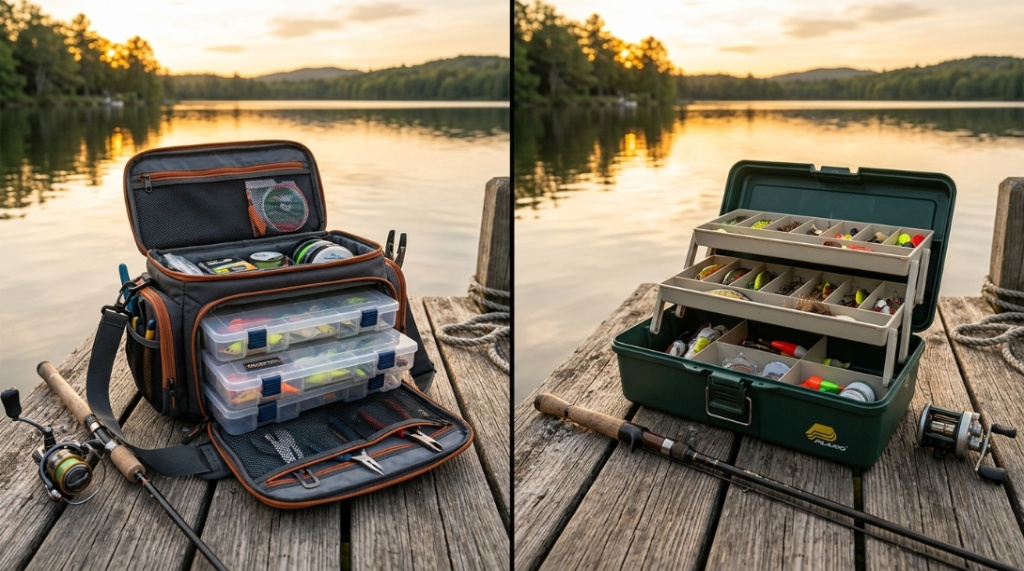
It’s the oldest debate in tackle storage: soft bag or hard box? Every angler eventually faces this choice — usually after their current system fails them on the water. The rigid tackle box doesn’t fit in the kayak hatch. Maybe the soft bag let water seep in and rust your hooks. You’re just tired of the limitations and wondering if the grass is greener.
The frustrating truth? Internet forums are full of passionate opinions on both sides, usually from anglers who’ve only committed to one system. “Bags are better, period.” “Boxes are the only serious option.” Neither is universally correct. The better choice depends entirely on how you fish, where you fish, and what your tackle demands.
This guide breaks down the real differences performance, fishing tackle protection, portability, durability, cost, and accessibility — so you can make a decision based on your actual fishing life, not someone else’s preferences. We’ll compare head-to-head across every metric that matters and tell you exactly which situations favor each option.
What Are the Fundamental Differences Between Tackle Bags and Tackle Boxes?
Before comparing performance, let’s clarify what we’re actually comparing:
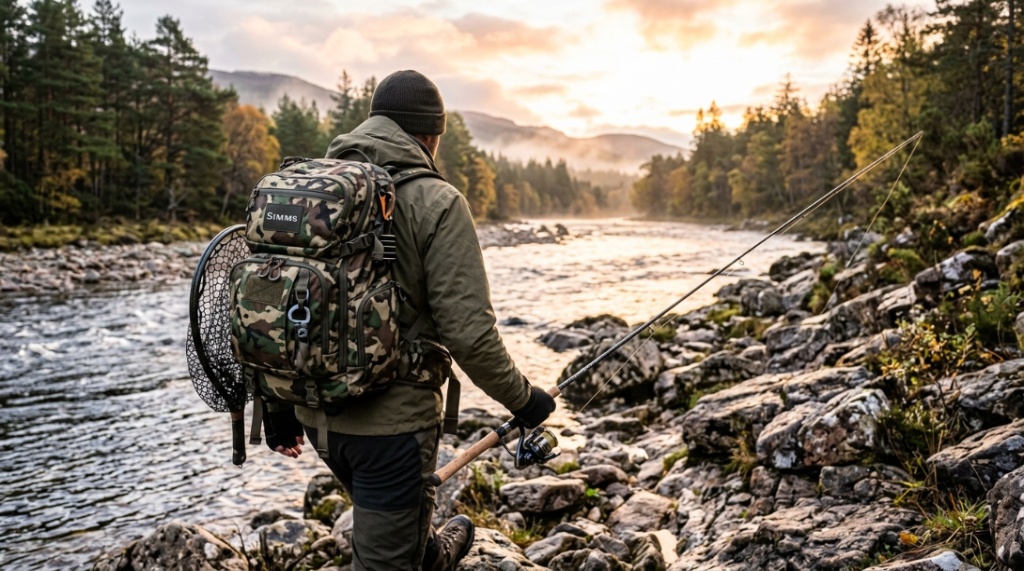
Fishing Tackle Storage Bags: Soft-sided containers made from woven fabrics (polyester, nylon, Cordura) with internal organization via removable utility trays, built-in pockets, and external attachment points. They range from small slings to large backpack-style systems. Structure comes from the contents, not the container itself.
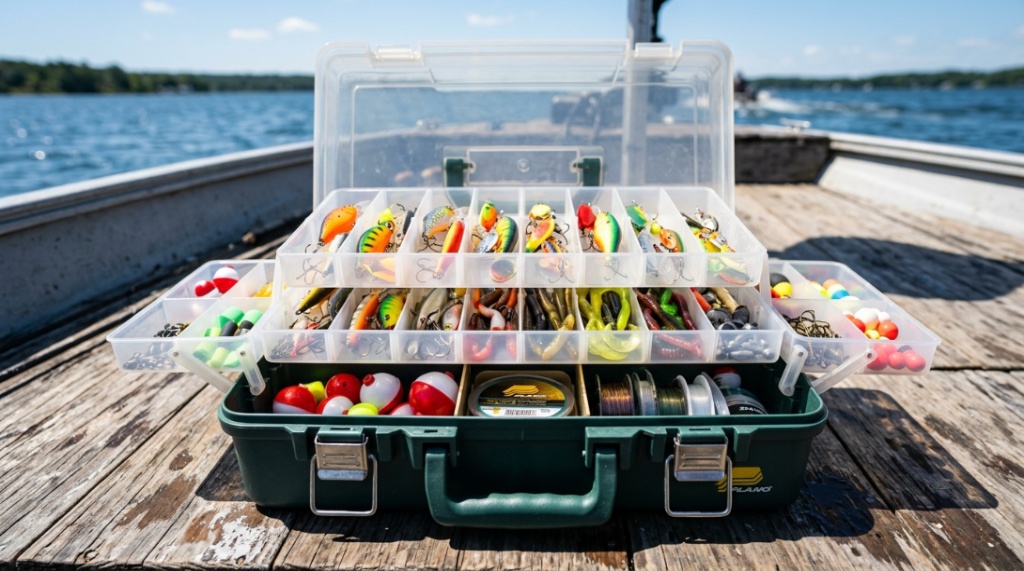
Tackle Boxes: Rigid containers made from molded plastic (polypropylene, ABS) with integrated compartments, latching lids, and fixed internal architecture. They range from small single-tray utility boxes to large multi-drawer systems. Structure is inherent — they maintain shape empty or full.
The core philosophical difference: bags are flexible containers that adapt to their contents and environment. Boxes are structured containers that protect contents through rigidity. Both approaches have genuine advantages and real limitations.
Which Offers Better Fishing Tackle Protection?
Protection is typically the #1 concern — your tackle represents hundreds or thousands of dollars. Here’s how each option performs:
Impact/Crush Protection
Tackle Box: Winner. Rigid plastic shells absorb and distribute impact forces away from contents. A tackle box can be stepped on, sat on, or dropped from truck-bed height without internal damage. The contents are physically separated from external forces by a structural shell.
Tackle Bag: Moderate. Fabric provides minimal crush protection. A loaded backpack placed on top of your bag can compress contents together. Internal utility trays provide some protection, but the bag itself offers little structural defense. Padded models improve this somewhat.
Water/Moisture Protection
Tackle Box: Good but imperfect. Sealed-lid boxes (like Plano Edge) provide excellent moisture barriers. However, standard boxes with simple latch closures allow water intrusion through the lid seam — especially when submerged or in heavy rain. Water pools inside with nowhere to drain.
Tackle Bag: Varies widely. Budget bags offer minimal water protection — fabric absorbs moisture, wicks it inward, and holds it against tackle. Premium bags with DWR coating, sealed seams, and waterproof bases perform well against splashes and rain. Roll-top waterproof bags match or exceed box-level protection. Key advantage: bags with mesh drain points release water instead of pooling it.
UV Protection
Tackle Box: Winner. Opaque plastic blocks all UV light from reaching contents. Soft plastics, line, and painted baits degrade in UV — boxes eliminate this entirely with zero effort.
Tackle Bag: Partial. Fabric reduces UV penetration but doesn’t eliminate it entirely (especially thin or light-colored fabrics). Contents in zipped-closed compartments fare better than those in mesh pockets. Not a concern for day trips but relevant for gear left in sunlight long-term.
Hook Separation/Tangle Prevention
Tie. Both use the same utility tray system internally. Whether your 3600 tray sits inside a box or inside a bag, the dividers provide identical hook separation. The container type doesn’t affect this — the tray design does.
| Protection Factor | Tackle Box | Tackle Bag | Winner |
|---|---|---|---|
| Impact/Crush | ★★★★★ | ★★☆☆☆ | Tackle Box |
| Water (standard models) | ★★★☆☆ | ★★☆☆☆ | Tackle Box (slight) |
| Water (premium models) | ★★★★★ | ★★★★☆ | Tackle Box (slight) |
| UV Protection | ★★★★★ | ★★★☆☆ | Tackle Box |
| Hook Separation | ★★★★☆ | ★★★★☆ | Tie (tray dependent) |
| Dust/Sand Intrusion | ★★★★☆ | ★★★☆☆ | Tackle Box |
Protection verdict: Tackle boxes provide superior physical protection across most metrics. If your primary concern is keeping tackle in pristine condition against environmental threats, boxes win clearly.
Your storage needs drastically change depending on where you cast your line. For instance, if you are heading down to the beach, packing light is essential because you will already be carrying heavy, specialized gear down to the shoreline. Before you pack up your lures, you need to Choose the Best Surf Fishing Rod to handle the heavy surf and long distance casting. Once you have your rod picked out, pairing it with a lightweight, salt-resistant tackle bag will make trekking across the sand significantly easier than lugging a heavy plastic box.
Which Is More Portable and Easier to Carry?
Portability determines whether your storage actually goes where you fish — or stays in the truck because it’s too inconvenient:
Tackle Bag: Clear Winner. Shoulder straps, backpack harnesses, hip belts, and cross-body slings make bags wearable for miles of walking. They conform to body shape, distribute weight across large muscle groups, and leave hands free for rods and navigation. A 15 lb loaded bag on your back feels manageable for hours.
Tackle Box: Limited. Carried by a single handle — all weight concentrated in one hand/arm. Over short distances (truck to boat, car to pier), this works fine. For bank walking, hiking to remote spots, or kayak portaging, single-handle carry becomes painful quickly. Some premium boxes add shoulder straps, but the rigid shape still doesn’t conform to body movement.
Space Conformity: Bags squeeze into irregular spaces — kayak hatches, boat compartments, car footwells, between seats. They compress slightly and flex around obstacles. Boxes demand their full footprint regardless of available space. A box that’s 2 inches too wide for a compartment simply won’t fit — no negotiation.
Weight (empty): Bags typically weigh 1-3 lbs empty. Hard boxes in equivalent capacity weigh 3-6 lbs empty. When your tackle already weighs 10-15 lbs, every ounce of container weight matters — especially for anglers who walk to their spots.
Which Provides Better Organization and Accessibility?
How quickly can you find and deploy what you need?
Tackle Bag: Winner for variety. Multiple pocket types, external tool loops, removable tray configurations, and varied compartment sizes accommodate diverse organizational strategies. You can create custom zones for different access speeds (instant-access pockets vs. deep-storage compartments). The bag itself becomes an organizational system, not just a container.
Tackle Box: Winner for visibility. Open the lid and see everything simultaneously. No digging through layers, no zipping open multiple sections. For anglers who prefer visual scanning over memory-based retrieval, the open-box approach is unbeatable. Multi-drawer boxes extend this advantage vertically.
Tool access: Bags win here decisively. External loops, elastic keepers, and MOLLE attachments put tools (pliers, cutters, hook files) on the outside — grabbable without opening anything. Boxes require tools stored inside, adding a step to every tool retrieval.
On-water reorganization: Boxes are easier to reorganize at the ramp or on the boat — the rigid structure stays open while you sort. Bags collapse when empty sections are accessed, making mid-trip reorganization slightly harder. Minor difference, but noticeable during tournament practice days when you’re constantly refining your loadout.
Which Lasts Longer — Tackle Bags or Tackle Boxes?
Durability determines your long-term cost of ownership:
Tackle Box Lifespan: 5-10+ years with basic care. Rigid plastic doesn’t wear from friction, doesn’t absorb moisture damage, and handles sun exposure reasonably well (though plastic can become brittle over many years of UV exposure). Failure points: latch mechanisms, hinge pins, and dropped-corner cracks. These are often repairable.
Tackle Bag Lifespan: 2-5 years depending on fabric quality and use intensity. Zippers are the primary failure point (sand, salt, and frequency of use degrade them). Fabric abrasion at contact points (where the bag rests on surfaces) eventually wears through. Stitching at stress points (handles, straps) can fail under heavy loads. Less repairable than boxes.
Budget-tier comparison: A $15 tackle box outlasts a $15 tackle bag by 3-4x typically. At the budget level, the simplicity and rigidity of boxes is a significant durability advantage.
Premium-tier comparison: A $120 premium bag (1680D Cordura, YKK zippers) lasts 4-5 years of heavy use. A $80 premium box lasts 8-10 years. Boxes still win on pure lifespan, but the gap narrows at higher quality levels.
How Do Costs Compare Over Time?
Beyond purchase price, consider the total cost of ownership:
Initial Investment:
- Budget tackle box system (box + trays): $25-50
- Budget tackle bag system (bag + trays): $35-60
- Mid-range box system: $50-100
- Mid-range bag system: $60-120
- Premium box system: $80-150
- Premium bag system: $120-200
Replacement Cycle Cost (per year):
- Boxes: $10-20/year (occasional latch replacement, tray refresh)
- Bags: $25-50/year (zipper repair, eventual bag replacement, strap wear)
5-Year Total Cost (mid-range):
- Box system: $50-100 initial + $50-100 maintenance = $100-200 total
- Bag system: $60-120 initial + $125-250 maintenance/replacement = $185-370 total
Boxes are cheaper long-term. Bags cost more but offer portability and organizational advantages that many anglers consider worth the premium.
When Should You Choose a Tackle Bag Over a Tackle Box?
Bags are the better choice when:
- You walk to fishing spots — any distance over 200 yards makes bags vastly more comfortable
- You fish from a kayak — bags conform to irregular storage spaces that boxes simply can’t fit
- You carry multiple technique options — bags’ varied pocket types organize diverse gear better
- You value hands-free carrying — shoulder/backpack straps free both hands for rods and navigation
- You need external tool access — pliers and cutters on the outside, always ready
- Space is limited or irregular — bags squeeze into non-standard compartments and crevices
- You fish multiple platforms — bags transfer between boat, bank, and kayak more easily
When Should You Choose a Tackle Box Over a Tackle Bag?
Boxes are the better choice when:
- Your tackle lives on a boat permanently — boxes sit in compartments and provide maximum protection without portability needs
- Crush protection is critical — heavy gear stacked above, rough transport conditions, or fragile contents demand rigid shells
- You fish saltwater — sealed boxes resist salt intrusion better than most bag fabrics, protecting expensive hardware
- You prefer visual scanning — open the lid, see everything at once, no memory required
- Budget is the primary concern — boxes deliver more years of service per dollar spent
- You rarely carry tackle far — truck to boat or car to pier is the maximum travel distance
- Maximum longevity matters — a good box can serve 10+ years, outlasting any bag by 2-3x
Can You Use Both? The Hybrid Approach
Many experienced anglers combine both systems for the best of each world:
Home storage: Boxes. Rigid boxes on shelves protect tackle long-term, stack neatly, and offer visual inventory checking. This is your permanent tackle library — organized, protected, and accessible for trip-packing.
Trip transport: Bags. For the actual fishing trip, load relevant trays from home-storage boxes into a portable bag. The bag handles the carrying, the boat-access, and the on-water organization. After the trip, trays return to their home boxes.
Boat permanent storage: Boxes in compartments. Tackle that lives on the boat year-round goes in sealed boxes fitted to compartment dimensions. These never need to be portable — they sit in their designated spots permanently.
Bank/wade/kayak fishing: Bags exclusively. When mobility is required, bags dominate entirely. No compromise — boxes simply can’t serve mobile anglers effectively.
This hybrid approach uses each system where its advantages shine and avoids forcing either into situations where it’s weak.
If you’re building a hybrid system or looking for specific bag recommendations to complement your existing boxes, this resource on fishing tackle storage bags and wraps reviews top options across all price ranges and fishing styles.
What About Newer Alternatives That Combine Both Approaches?
The market has responded to the bag-vs-box debate with hybrid products:
Semi-rigid bags: Bags with molded plastic frames or insert panels that provide box-like crush protection while maintaining bag-like portability. Brands like Plano and Shimano offer these — they’re heavier than pure bags but significantly more protective.
Soft-lid boxes: Rigid bases with fabric top sections that offer multiple pocket types (bag advantage) while maintaining a solid, protective bottom half (box advantage). Good middle-ground for boat anglers who want both protection and pocket organization.
Modular box-in-bag systems: Small rigid boxes that click into specially designed bag slots. You get box-level protection for individual tray units plus bag-level portability and multi-pocket organization for the overall system. The Evolution Outdoor and Wild River lines excel here.
Roll-top waterproof bags with rigid inserts: Full waterproof protection (exceeding most boxes) with removable rigid tray inserts that provide internal structure. Best of both worlds for kayak and wade anglers who face submersion risk.
FAQ
Are fishing tackle storage bags waterproof enough to replace sealed tackle boxes?
Premium bags with sealed seams, DWR coating, and waterproof bases handle rain, splashes, and wet surfaces effectively. However, for full submersion protection (kayak capsizing, wade fishing dunks), only roll-top dry-bag style tackle bags match sealed boxes. Standard fabric bags, even quality ones, are water-resistant — not waterproof. Know the difference based on your risk level.
Do tackle bags protect hooks from rusting as well as sealed boxes?
No — standard bags allow more air and moisture circulation than sealed boxes. For rust-sensitive environments (saltwater, humid storage), use sealed utility trays (Plano Edge, Flambeau Zerust) inside your bag. The tray provides the rust seal; the bag provides the portability. This combination matches box-level rust protection.
Which option is better for fly fishing specifically?
Bags — specifically chest packs and sling bags designed for fly fishing. Fly tackle (flies, leaders, tippet) is light, small, and accessed frequently during active fishing. The body-worn accessibility of bags is essential for wade-fishing fly anglers. Fly boxes (small rigid cases for fly storage) still go inside these bags as organizational units.
Can I fit a tackle box in a kayak hatch?
Depends on box and hatch dimensions. Most standard tackle boxes (over 14″ wide) don’t fit typical kayak hatches. Small utility boxes (3600/3700 trays) fit individually but can’t be contained in a larger organizational system. Bags designed for kayak fishing are specifically sized for hatch openings and irregularly shaped kayak storage wells.
What’s better for traveling with fishing gear on airlines?
Bags — specifically soft-sided bags that compress for checked luggage. Hard boxes don’t compress, can crack under luggage handling pressure (ironically — the rigidity that protects from fishing impacts fails against baggage handler forces), and take up more suitcase space. Tackle wraps and soft bags packed inside luggage survive airline travel better than rigid boxes.
Which option handles saltwater environments better overall?
Sealed rigid boxes (Plano Edge, similar) provide the best saltwater protection due to gasket seals and non-porous materials. However, bags with corrosion-resistant zippers and rinse-and-dry convenience can work if you maintain them religiously after each trip. The key: sealed trays inside either container type, plus thorough freshwater rinse within 24 hours of salt exposure.
I’m a beginner angler with a small tackle collection — which should I start with?
Start with a mid-range tackle bag ($40-60) that holds 3-4 utility trays. This covers your initial needs, grows with you as you add tackle, and teaches you organizational habits. Once you outgrow it (typically 1-2 years in), you’ll know whether your fishing style favors bags long-term or whether a box system